The Cheapest Ways to Call Family Abroad from the US
Free app calls, VoIP credit, prepaid cards or your carrier: how a US household can keep calls to relatives overseas cheap, and the traps that eat your minutes.
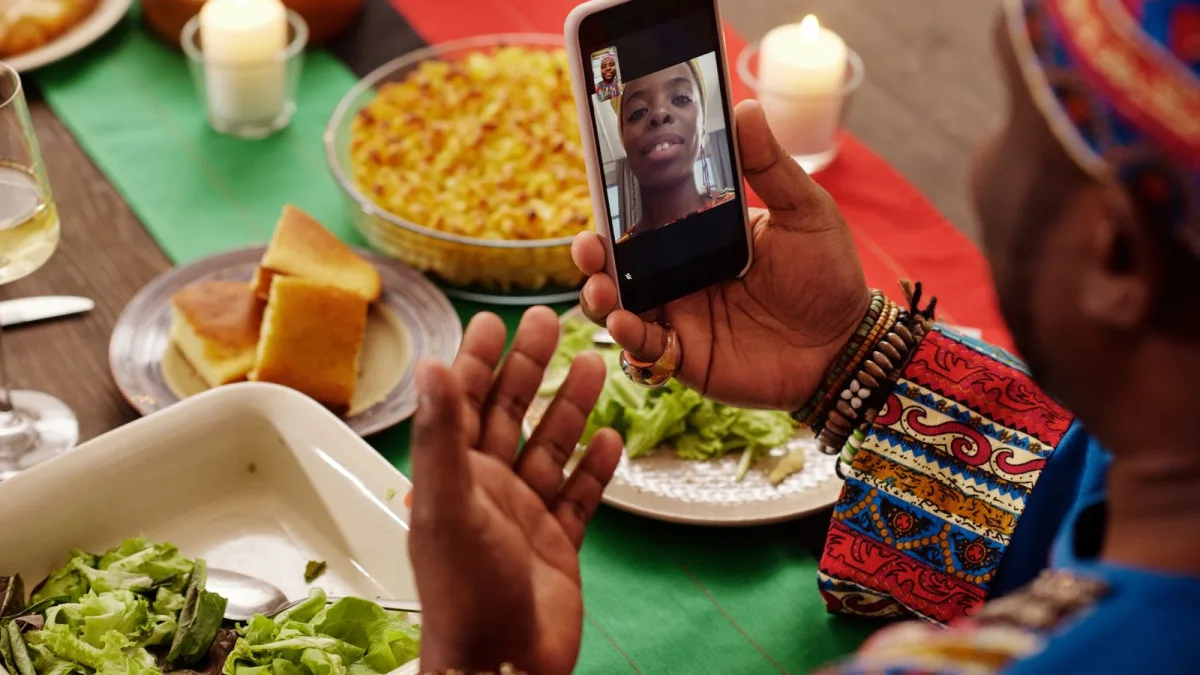
If your sister in Manila can open the same calling app you use, your weekly call may cost nothing at all. Some internet calling services are free, though normally only for calls between people on that same service. If your grandmother only answers the landline in her kitchen, you'll pay for the call one way or another. The real question then is how much of your money turns into actual talk time.
First, find out what your relative can actually use
Before you compare anything, ask on your next call: does she have a smartphone, and is there Wi-Fi or a data plan at her end? The answer sorts most households into one of two routes.
Every VoIP service needs an active broadband internet connection. In an app-to-app call you're both VoIP users, so you both need that connection. An app that sounds perfect in your living room won't help much if your uncle's connection drops every evening.
While you're at it, agree on a regular calling time that works in both households' time zones. A call that wakes them up in the middle of the night won't feel cheap, whatever it costs.
Route 1: free calls between people on the same app
This is the cheapest option when it works. Install the same app on both phones, make a short test call, and check that the audio holds up over their connection, not just yours.
The catch is usually practical. Older relatives may need help installing the app or keeping it signed in, and some simply want the regular phone to ring. If you're visiting soon, set it up in person. Five minutes at their kitchen table beats an hour of talking someone through settings menus over a bad line.
Route 2: calling a regular phone number abroad
Not every VoIP service can do this. Check first. Some only connect you with people on the same service. Others can call anyone with a phone number, including international mobile and landline numbers.
On the other end, nothing changes. If you're calling their regular phone, they need no special equipment to talk to you. Grandma picks up the same handset she always has.
What changes from one service to the next is how you pay. Some providers let you call anywhere at a flat rate for a fixed number of minutes. Others bill you per minute from prepaid credit. Google Voice works that way: you can make international calls from a Google Voice number on a computer or phone, and its rates vary by destination and are charged per minute. How often you call matters here. Someone who calls Lagos twice a month and someone who calls Lima every night may pick different plans, so compare the terms for your destination and for the type of phone you're calling.
Enter the number in international format
With Google Voice, you type the country code before the phone number. For Brazil, that means entering 55 first. The same logic applies to most internet calling services. If you're unsure how a particular country's numbers are written, see how to dial an international number from the US or a country page such as how to call Brazil.
Check that the call is really going through the service
When a call goes through Google Voice, the app shows you a message about it. If you don't get that message, your call isn't using Google Voice, and your mobile carrier can charge you for it. Watch the screen the first few times, especially if you dial from your phone's contact list instead of from inside the app.
Also, you can't make emergency calls with Google Voice. For 911, use your phone's regular dialer.
Prepaid calling cards: check before you pay
Cards still have a place, for example as a backup or for someone who doesn't want an online account. But the number of minutes printed on the card isn't the whole story. The FTC and the FCC have warned that hidden costs and other problems can leave you with less call time than you were promised.
When the FTC tested one marketer's cards between August 2010 and March 2011, the cards delivered an average of only 45% of the advertised minutes. The FTC also alleged that those cards carried hidden fees, such as hang-up fees and weekly fees, and that the fees could wipe out a card's value after even one short call.
What to ask about a card before you buy it
- Are there added fees, such as disconnect fees, maintenance fees or pay phone surcharges?
- Do the advertised minutes only apply if you use them all in one call?
- Do the minutes still apply if you use the toll-free access number instead of the local one?
- Can the minutes be used to call cell phones? That matters if your relative mostly uses a mobile.
- Can you start small? The FTC suggests buying a small-denomination card first so your loss is limited if something goes wrong.
Then test it. Note the balance, time your first call with your phone's clock, then check the balance again. If the numbers don't line up with what the card promised, you've lost a few dollars instead of a large prepaid balance.
Caribbean +1 numbers: a familiar format, an international call
If your family is in Jamaica or the Dominican Republic, the number may look like a US number. Both countries share the North American Numbering Plan with the United States, Canada, the Bahamas, Barbados, Trinidad and Tobago and several other Caribbean islands.
Sharing a numbering plan doesn't make the call domestic. Far from it. The FTC points out that some numbers with three-digit area codes look like they're inside the US but are actually international phone numbers, often in the Caribbean. So before a long call to Kingston or Santo Domingo, check how your plan or calling service bills that country.
Our pages on how to call the Dominican Republic and how to call Jamaica show the exact dialing format. And if an unknown Caribbean number rings once and hangs up, read about one-ring scam calls before you call back.
Which route fits your household
| Your situation | Start with | What to check |
|---|---|---|
| Your relative can use the same app online | An app-to-app call | Free service is normally limited to other users of the same service. |
| Your relative only has a landline or a basic mobile | A VoIP service that calls phone numbers | They need no special equipment, but you need broadband. |
| You want a card as a backup | A small prepaid card | Access-number rules, calls to cell phones, added fees. |
| Family in Jamaica, the Dominican Republic or another Caribbean +1 country | Your usual method, after checking the rate | The number can look domestic but still be international. |
FAQ
What is the cheapest way to call a landline abroad from the US?
A landline can't take an app call, so you'll need a service that reaches regular phone numbers. Some VoIP services can call international landlines and mobiles, and the person answering needs no special equipment. Then compare how each option bills: a flat rate for a fixed number of minutes or a per-minute charge.
Are international calling cards still worth it?
They can work as a backup if you check the fees and access rules first. The FTC warns that hidden costs can shrink the call time you get, and it suggests trying a small-denomination card before buying more.
Do app calls to another country cost anything?
Some services are free between people who use the same service. You both still need an active broadband connection. Calls from an app to a regular phone number abroad are a different product, usually billed per minute or through a minutes plan.
Is calling the Dominican Republic or Jamaica an international call?
Yes. Both countries share the North American Numbering Plan with the US, but the FTC notes that numbers like these can look domestic while being international. Check how your plan bills them before you rely on a long call.
Sources
- Federal Communications Commission (archived by the U.S. Court of Appeals for the First Circuit Library): Voice Over Internet Protocol (VoIP), FCC consumer page (archived copy of fcc.gov/general/voice-over-internet-protocol-voip) (accessed 2026-09-24)
- Google Voice Help: Make a call with Google Voice (accessed 2026-09-24)
- Federal Trade Commission: FTC Warns Consumers to Beware of Pitfalls When Choosing Pre-paid Phone Cards (accessed 2026-09-24)
- Federal Trade Commission: Prepaid Phone Card Marketers Agree to Pay $2.32 Million to Settle FTC Charges (accessed 2026-09-24)
- North American Numbering Plan Administrator: About NANPA (accessed 2026-09-24)
- Federal Trade Commission, Consumer Advice: "One-ring" cell phone scam can ding your wallet (accessed 2026-09-24)